When the Moon Pulls Harder
Full moon, spring tides, and what the ocean does when everything lines up.
Field Notes from Hunting Island · Beach & Marsh · Full Moon Week
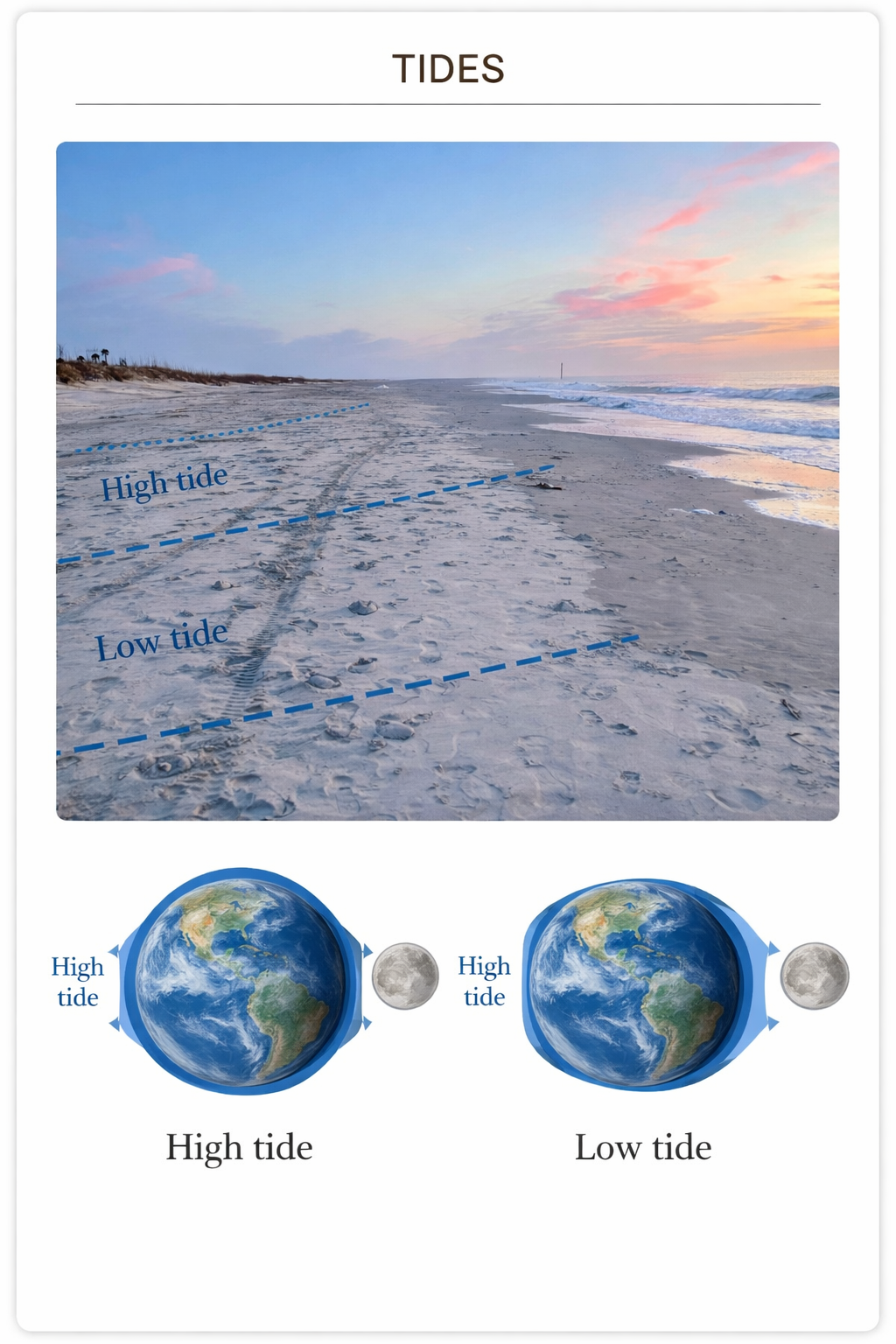
I had heard the term spring tide before. I thought it meant something happened in spring. It doesn't. A spring tide happens twice a month — at full moon and new moon — when the sun, earth, and moon align and their combined gravitational pull stretches the ocean's surface harder than usual. Higher highs. Lower lows. The whole tidal range amplified. The full moon at Hunting Island isn't a backdrop. It's an event — and the marsh rearranges itself to receive it. I noticed it before I understood it. The week of the full moon at Hunting Island the water at high tide was coming further up the beach than it had been. At low tide the mudflats extended further out than usual — acres of spartina root and pluff mud laid bare, alive with fiddler crabs and the long-billed probing of willets working the exposed bottom. The moon doesn't just light the night here. It schedules the marsh. It determines where the shrimp boats go and when. It decides which sections of beach the loggerhead turtles can reach to nest. It pulls six feet of Atlantic ocean up onto the land and then lets it fall back twice a day, every day, with a precision that no tide chart invented — only recorded. I stood on the beach the night of the full moon and watched it rise over the water. Orange at first, then white, then so bright it cast shadows on the sand. Groot sat beside me and didn't move for a long time. I think he could feel the pull too. rootsrainboots@gmail.com · Field Notes from Hunting Island ROOTS & RAINBOOTS NATURE CO. Check the moon phase before your next beach walk. Then check the tide chart. Then notice how they match.
— Tamara Roots & Rainboots Nature Co. Certified Forest School Teacher (FSTI) · Shorebird St