Something Stopped Me On The Boardwalk
ROOTS & RAINBOOTS NATURE CO.
Something Stopped Me on the
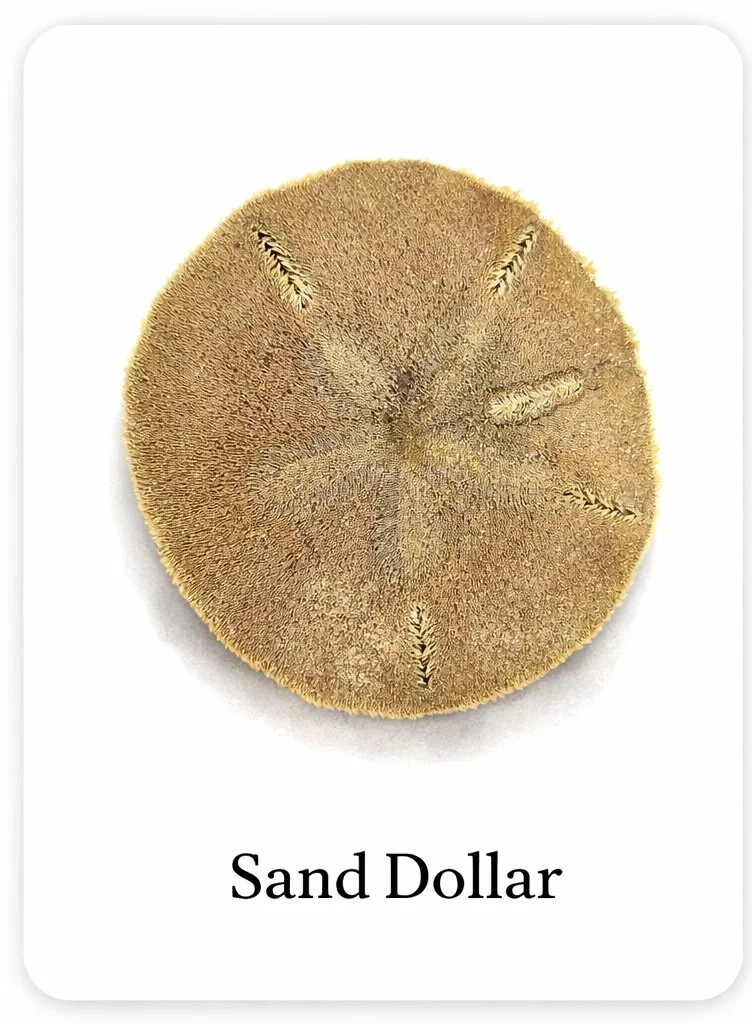
A sand dollar, the tide, and what I didn't know I didn't know. Field Notes from Hunting Island · Early Morning · Boardwalk I thought I knew what a sand dollar was. White, flat, round. The kind of thing you find bleached dry above the wrack line and bring home in a zip-lock bag. I'd seen hundreds of them. I thought that was the whole story. Then I found one on the boardwalk at Hunting Island just after sunrise, and it stopped me cold. It was covered in short, dense, velvety brown spines — still moving. The whole surface of it was alive in a way the white ones never suggested. I knew, technically, that sand dollars are animals. Echinoderms — relatives of sea urchins and starfish. But knowing a thing and seeing a thing are different. The spines on a living sand dollar are called cilia, and the animal uses them to move slowly along the seafloor and pass food toward its mouth. The mouth is on the underside, at the center. When the animal dies and the spines fall away, what's left is the test — the hard white skeleton that ends up in zip-lock bags. This one was recently dead, or very close to it. Spines intact, still faintly purple-brown. It had probably washed up on the overnight tide and come to rest on the boardwalk planks. The ocean had decided where it landed. Not me, not a gift shop. rootsrainboots@gmail.com · Field Notes from Hunting Island ROOTS & RAINBOOTS NATURE CO. I set it back down. I took a picture. And then I stood there longer than I needed to, thinking about how many times I had walked past the white ones and assumed I understood them. That's the thing about becoming a naturalist. You don't stop being surprised. You just get better at paying attention to the surprises.
— Tamara Roots & Rainboots Nature Co. Certified Forest School Teacher (FSTI) · Shorebird Steward, Audubon SC · Camp Host rootsrainboots@gmail.com · Field Notes from Hunting Island