The Dive
ROOTS & RAINBOOTS NATURE CO.
The Dive
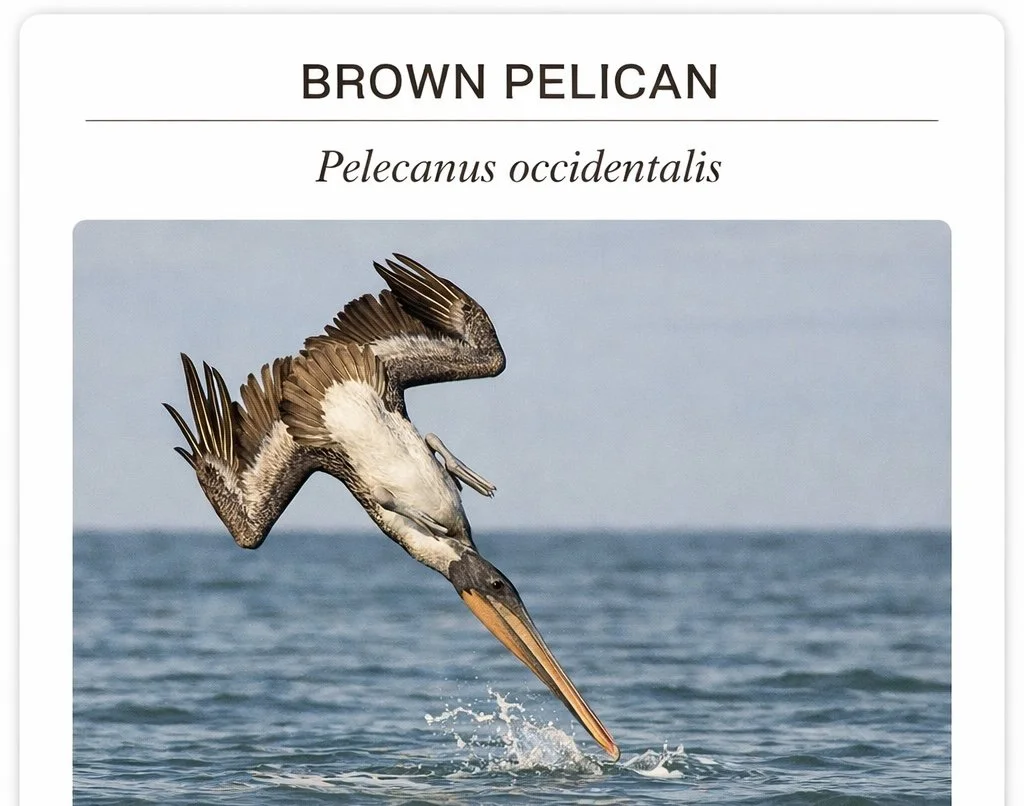
How a brown pelican hits the water, and why I can't stop watching it.
Field Notes from Hunting Island · Beach & Surf · Mid-Morning There is no warning. One moment it's gliding — that prehistoric silhouette coasting on a thermal, wings barely moving, riding the air column off the water's surface. And then something shifts. The head angles down. The wings fold back. And the whole bird becomes a spear. It isn't graceful in the way people mean when they call birds graceful. It's precise. It's committed. It's forty miles per hour straight into the Atlantic. The first time I watched a brown pelican dive I actually flinched. The speed of it. The commitment. From full glide to full plunge in what felt like a single frame — hitting the surface with a force you can hear from thirty feet away. What the pelican has that makes this survivable is extraordinary anatomy. Air sacs beneath the skin of its chest and throat inflate on impact, cushioning the collision. Its bill snaps shut around the fish, and the expandable pouch — which can hold three times more than its stomach — strains the water out while holding the catch. The whole sequence, from plunge to surface, takes about a second. Brown pelicans nearly vanished in the 1970s. DDT was thinning their eggshells to the point of collapse — the weight of a nesting parent was enough to crush them. The species was on the endangered list until 2009. Every pelican gliding over Hunting Island today is a recovery story, whether it knows it or not.
rootsrainboots@gmail.com · Field Notes from Hunting Island ROOTS & RAINBOOTS NATURE CO. I watch them from the beach most mornings now. The dive never gets ordinary. If you have a child who won't look up from the sand, point at a pelican and wait. You won't have to wait long.
— Tamara
Roots & Rainboots Nature Co. Certified Forest School Teacher (FSTI) · Shorebird Steward, Audubon SC · Camp Host rootsrainboots@gmail.com · Field Notes from Hunting Island