The Plant That Holds the Beach
ROOTS & RAINBOOTS NATURE CO.
The Plant That Holds the Beach
What I didn’t know about sea oats — and why the signs mean it.
Field Notes from Hunting Island · Dunes & Beach Approach
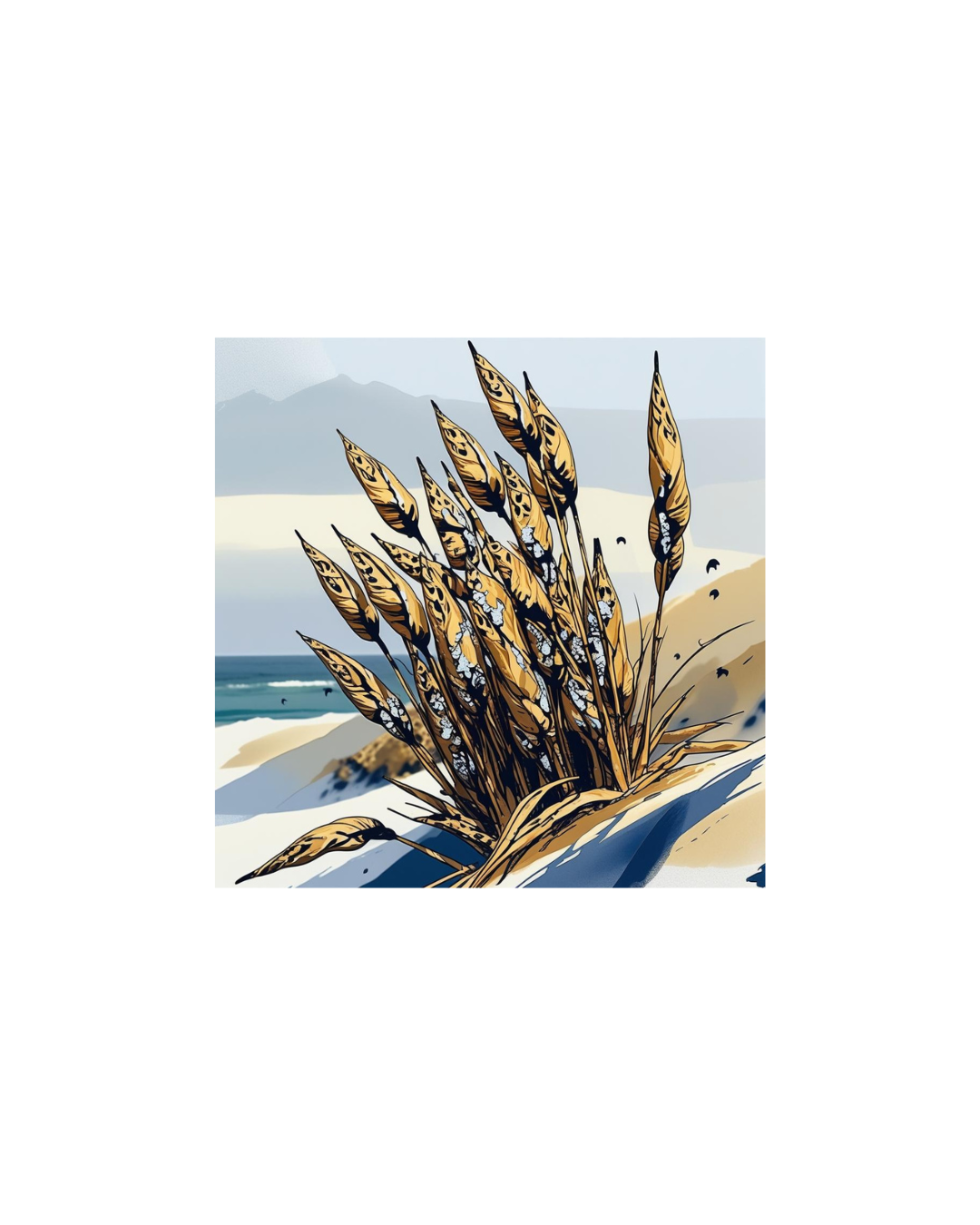
I had always obeyed the signs. Stay off the dunes. Do not pick the sea oats. I followed the rules the way most people do — not because I understood them, but because they were posted and seemed official. I knew vaguely that the roots held the sand. I didn’t know what that actually meant. Sea oats — Uniola paniculata — are the tall, nodding grass you see lining the dunes at Hunting Island, their heavy seed heads bending in the coastal wind. They look delicate. They are not. The root system of a mature sea oat plant can extend six feet down and spread twenty feet in every direction — an underground network that binds sand grains together with a grip that wind and water can’t easily break. When a storm pushes sand over the plant, sea oats don’t die — they grow upward through the new layer, sending out fresh roots as they rise. Sand burial that would kill most plants actually stimulates sea oats. The dune builds around them. They are the reason the dune exists at all. Sea oats are federally protected in South Carolina. It is illegal to pick, damage, or remove them. Not because someone decided they were pretty — but because without them, the dune erodes, the beach narrows, and everything built behind it becomes vulnerable. A single person cutting through a dune and snapping a few stems can undo years of stabilization. The boardwalk at Hunting Island was built after the sea oats were already there. The parking lot came after. The park infrastructure, the ranger station, the campground — all of it came after. The sea oats were holding that coastline long before anyone thought to put a sign next to them. I read the signs differently now. Not as rules. As acknowledgment that something was here first, doing essential work, and deserves to keep doing it.
— Tamara Roots & Rainboots Nature Co. Certified Forest School Teacher (FSTI) · Shorebird Steward, Audubon SC · Camp Host rootsrainboots@gmail.com · Field Notes from Hunting Island